
Cinema: Incendies
By Denis Villeneuve, Canada, 2010

Cinema is a series about films and documentaries that made a real impression. Not plot summaries, not ratings. Composition, colour, art direction, the way a scene is staged, what the music does before you've noticed it's there. Written by someone who has spent years working with image and watches accordingly.
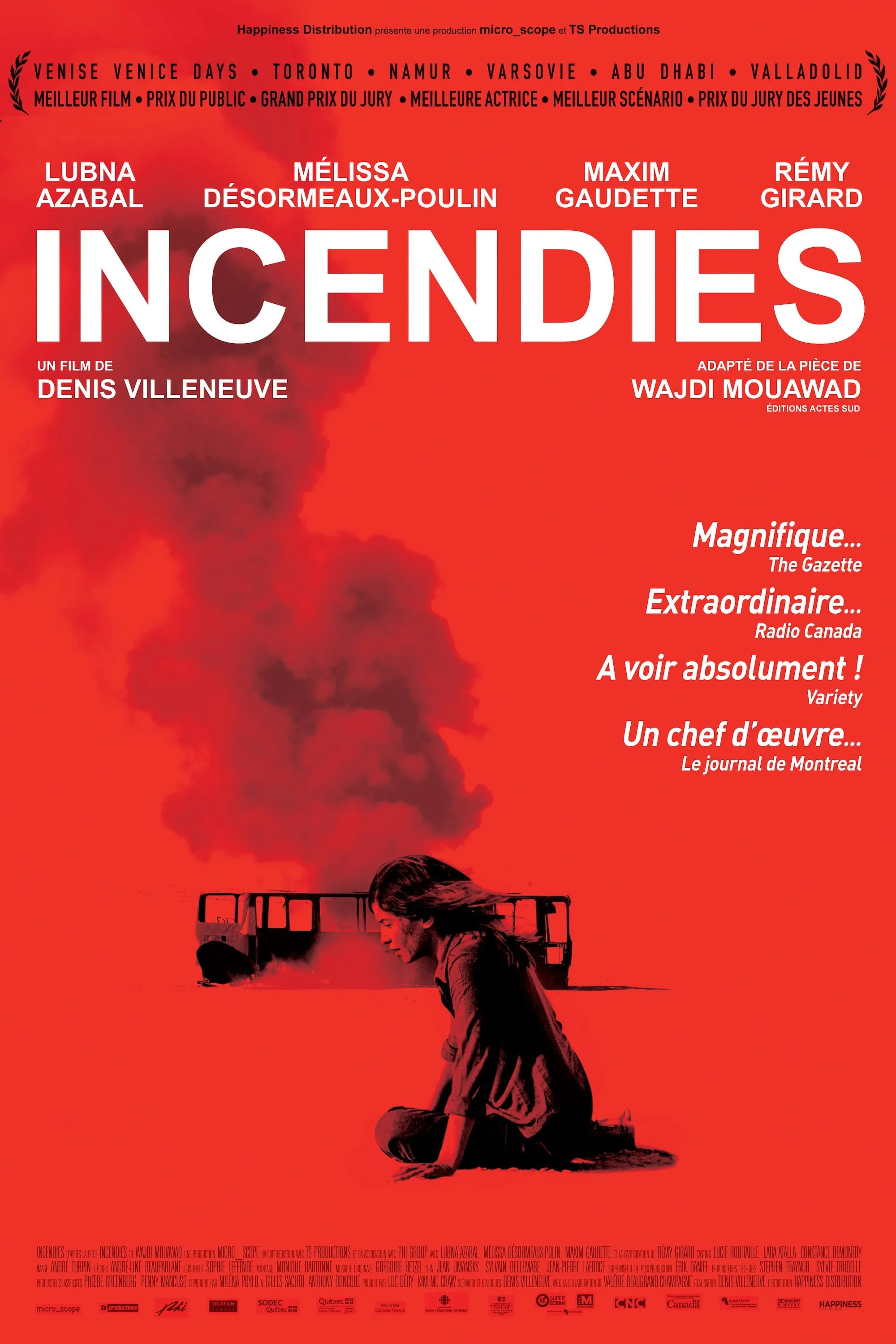
When someone has asked me over the years about the films that made the biggest impression om me, this one is always one of the first that comes up. I almost never watch a film twice. This one I have watched three or four times. And I rewatched it again for this essay.
A fall evening in 2010. Filmtheater Rialto on Ceintuurbaan, De Pijp, Amsterdam. The building is designed by architect Jan van Schaik in 1921: a beautiful art-deco facade on a street that has been doing the same thing for one hundred years. Three small screening rooms. The kind of cinema where the programme is curated and the audience arrives with intention.
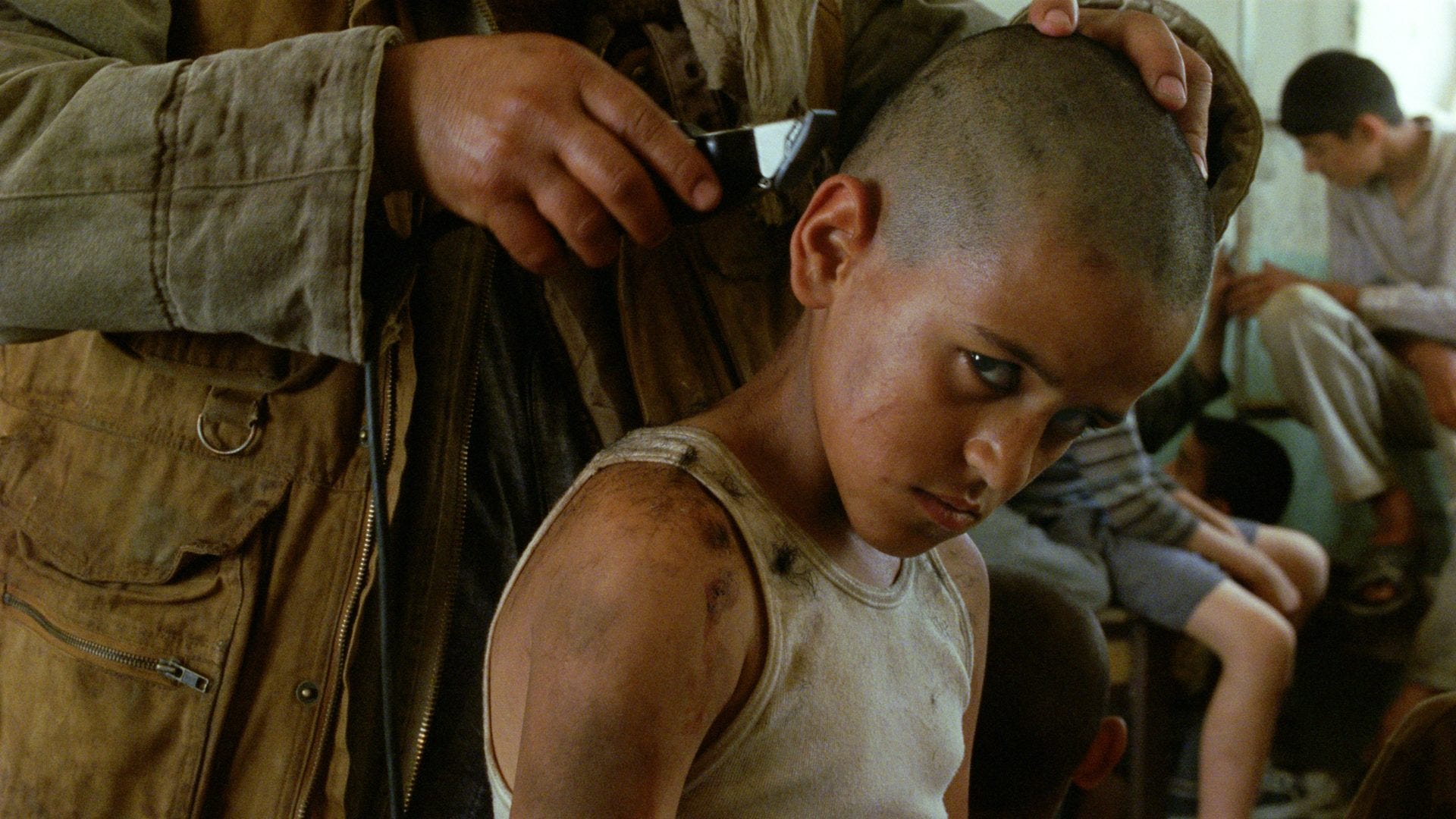
The film opens on a group of boys having their heads shaved by soldiers. Radiohead already playing. The camera moves across them very slowly. One boy looks straight into the lens as it closes in on him. On the back of his ankle: three small tattooed dots.
I’ve been obsessed with music as long as I’ve been obsessed with image. Both do something I’ve never fully been able to explain and have never stopped trying to. Music moves through the body before the brain registers it. An image stops you before you understand why. When both arrive at the same moment, tuned to each other, something else happens entirely. Not addition. Something closer to multiplication.
“You and Whose Army?” moving slowly across those boys. That flat grey light on shaved heads. The boy’s eyes on the camera. It gave me shivers. You don’t know yet what you’re watching, but the scene has already captured something in you. The register is set before the film has told you anything.
A great opening sequence doesn’t summarise. It calibrates. By the time those first minutes were over I was completely still in the way you are when you already know something is going to matter.
The film gives you two pieces of a puzzle at the start. Canadian twins, Jeanne and Simon, recently orphaned, are handed sealed letters by their mother’s notary: one to be delivered to a father they were told was dead, one to a brother they didn’t know existed. Everything that follows is built on those two facts. It moves between present-day Canada and a civil war in a country that is never named but unmistakably Lebanon, reconstructing the mother’s life decade by decade. Her name is Nawal, and the film follows both timelines until they meet. When they do, the conclusion doesn’t arrive as a shock. It arrives as a heavy weight.
The cinematography is by André Turpin. He makes the two timeframes legible without labelling them. The past is warmer, less composed, bodies held in the frame differently. The present is colder, more deliberate. Not stylised. More like the visual grammar has changed register, the way a voice does when it moves from memory into fact.
What the camera keeps doing is holding. Long takes that do not cut when you expect them to. A face. A landscape. A door. The discomfort is not incidental. It runs through the entire film.
There is a scene on a bus. Nawal is travelling through a dangerous stretch of the country, headscarf on, a cross hidden under her shirt. The bus is stopped by a Christian militia. The driver is shot. The passengers are executed one by one. There is sound in the bus during the shooting: voices, movement, the chaos of what is happening. Turpin doesn’t look away from it.
Then Nawal is outside. She has survived by pulling out her cross. She tries to take a small girl with her as she is released. The girl runs back toward her dead mother on the burning bus and is shot. Nawal stands alone by the fire, smoke rising. And here is where Turpin makes his decision: the sound drops almost entirely. Low strings underneath, and silence where everything else should be. You see the fire. You see Nawal’s face. You hear almost nothing. The horror arrives through what the frame refuses to give you.
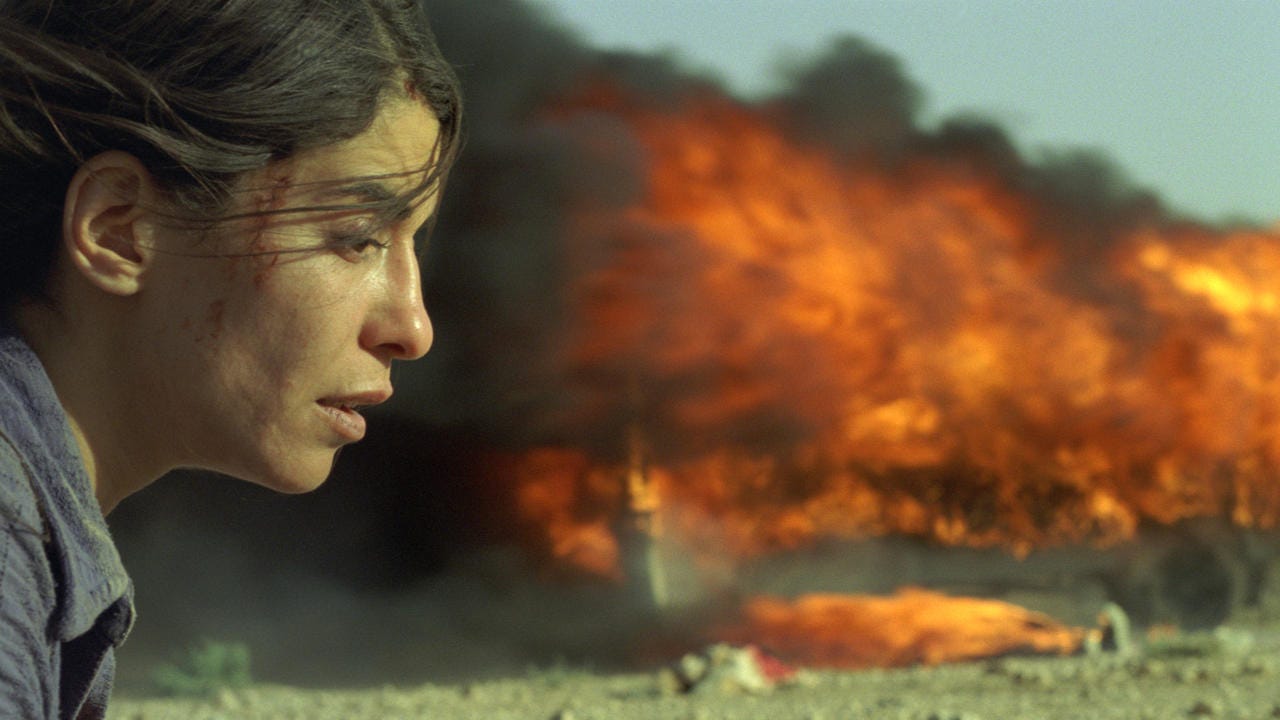
The scene is based on the 1975 Beirut bus massacre, when Phalangist militias opened fire on Palestinian refugees in Ain el-Rammaneh. The actual bus was displayed at a documentation centre in Beirut in 2011. Villeneuve never names the country. He doesn’t need to.
Lubna Azabal plays Nawal across what amounts to decades of a life. She carries the film’s visual logic in her body. How she holds herself changes. What her eyes do in close-up changes. No external signals, no music swell, no costume doing the work for her. She does nothing that isn’t necessary. For someone who works with image professionally, watching a performance like this is like watching a DOP make a decision: precision, nothing wasted.
The three dots on the ankle of the boy in the opening shot. By the end of the film you know what they mean. That’s all I’ll say.
Incendies stays in the body, not just the memory. Not because of the plot. Because of the quality of attention it required. The specific weight of sitting in a small screening room in Amsterdam with something that was not going to let you go.
The title means fires. In French it carries more weight than it does translated. Something between burning and being burnt. A state, not an event.
The two Radiohead tracks, “You and Whose Army?” and “Like Spinning Plates”, are the only music in the film. Both appear more than once. The second time you hear them, you understand why they were chosen. That’s the second calibration.
I knew how it ended this time. I still cried.
Directed by Denis Villeneuve. Cinematography by André Turpin. Canada, 2010. 130 minutes. Academy Award nominee, Best Foreign Language Film.
If you’ve seen it, I’d love to know: did it stay with you?